
What VADOC Mugshots Show
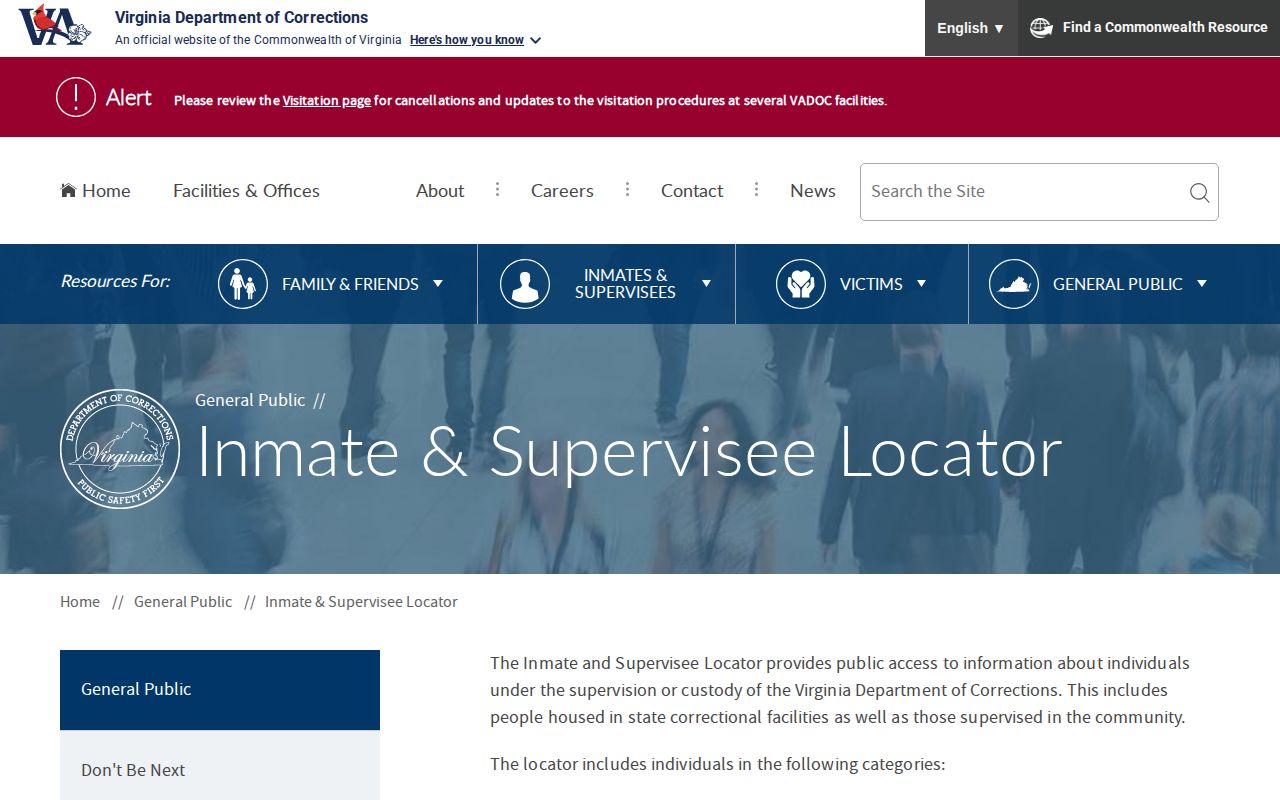
VADOC is short for the Virginia Department of Corrections, the agency that runs state prisons and community supervision. Its public locator reaches well beyond prison walls. People on probation or parole appear there too. So do those in institutional hospitals, in local or regional jails under VADOC authority, and in the Community Corrections Alternative Program. That reach is wide. It still won't replace every local jail roster.
Search it and you get a roster-style row listing identity and custody or supervision details. No photo comes back. The public result shows no general offender image. So the honest answer to a VADOC mugshots question is status yes, standard photo no. A separate Most Wanted page does carry photos for selected people sought in connection with warrants or supervision. Those notices aren't ordinary locator profiles. The official VADOC locator page describes who may appear in the state custody and supervision search. It's worth reading first.
Search the VADOC Locator
Name searches take the first three letters of a first name. Add the full last name. A DOC ID works too, and it runs seven digits. Too many hits? Advanced fields narrow by location, race, gender, and age range. You must accept the page's disclaimer before submitting.
Check identity, not just the name. Read the DOC ID, age, location, and release date together. VADOC updates the data daily yet warns it can be inaccurate or outdated. Confirm anything that matters with the agency. A blank or stale result isn't a local booking record. Nothing coming back? Check the spelling first. Then ask whether the person even falls under VADOC custody or supervision. A county pretrial booking or older local arrest may sit outside this locator. Try a known DOC ID when you have one.
- Open the official Inmate and Supervisee Locator and choose a name search or DOC-ID search.
- For a name, enter at least the first three letters of the first name and the full last name. For an ID search, use the seven-digit DOC ID.
- If needed, narrow results with the advanced location, race, gender, and age-range fields. Accept the displayed disclaimer.
- Compare the result’s DOC ID, age, and location with details you know. Read the release date and remember that the feed can be outdated.
- If you need an existing document or identification image, contact the VADOC records route rather than relying on an unofficial copy.
Don't hunt for a photo field the interface doesn't have. Use the result to pin down the state record. Then ask the right custodian about any specific photo.
What a VADOC Result Can Confirm
A matching row can separate a state record from a local booking, but its fields do a narrow job. The DOC ID pins down the state record. Location and release date show what the locator currently reports about custody or supervision. That's all. It is not a certified status letter, court docket, charge history, warrant check, or booking-photo archive. Daily updates can still lag or err.
Never trust a name alone. Compare DOC ID, age, listed location, and release date together. Contact VADOC when a status has real consequences. A name match proves little. It can't tie someone to an older local arrest. Blank results have limits too. The person may sit outside the locator's scope, may have been discharged recently, or may be filed under details that don't match your search.
The location field tracks the state system's record only. It won't name the police agency that made the arrest or the jail that made the first booking. People can pass through more than one custodian, so follow the arresting agency and its receiving jail for the local event.
VADOC Locator Record Fields
The locator result is a short public status record. It helps separate a state correctional entry from a local booking, but it isn't a full case file. Don't expect a booking photo. It also promises no full charge history or final court disposition.
| Displayed field | What it means |
|---|---|
| Name | The person’s name as listed in the VADOC locator. |
| DOC ID | The seven-digit state identifier used for an ID search. |
| Race and gender | Public demographic fields listed in the result service. |
| Age | The age value shown in the locator result, which should be checked with other identifiers. |
| Location | The VADOC location associated with the custody or supervision record. |
| Release date | The date shown by the locator. It may be outdated and is not a certified status notice. |
| Photograph | No general public locator photo field was present in the interface reviewed for this research. |
Coverage varies. A locator result may point to a regional jail or a state facility. Either way, VADOC did not necessarily take the original arrest photo. A sheriff, police department, or local jail often holds that image. It depends on how the arrest and intake unfolded.
Treat the release date as a data field. It is not a promise of release that day. Court orders, sentence calculations, and custody events are handled by other agencies and can change. When a date conflicts with an agency response, ask VADOC to confirm its current record. Use the responsible court for any case order.
VADOC Offender Photo Policy
VADOC Operating Procedure 920.1 covers one narrow thing. Staff must take a digital identification photograph of each probationer and parolee. Photos get refreshed after major appearance changes. That is an internal ID rule. It sets no public photo schedule, because the public locator shows no general image profile at all.
This distinction trips people up. A state prison profile does not have to resemble a local jail mugshot result. An ID photo can sit in agency files. The locator simply never displays it. Nor does the policy promise that released people stay searchable online, and a person discharged from supervision may drop off the locator.
The rule serves supervision, not the public. It fixes no replacement date for online images. It does not claim every person under supervision shares the same public record. Even an internal photo stays internal unless the agency decides it can legally release the item. Absence from the locator proves nothing about update history.
Ask for the right record. For a supervision image, name it as a VADOC identification photograph. For a booking image, go to the arresting agency or the receiving jail. Ask for the adult initial-intake record. Existence, public display, and retention are three separate questions. The written VADOC Operating Procedure 920.1 spells out the identification-photo process for supervision records.
Note: A photo-update instruction for staff is not a promise that the same photo appears in every public search result.
VADOC or Local Booking Photo?
State and local photo records answer different questions. A county booking image comes from routine intake after an arrest. A VADOC identification image traces to state custody or supervision instead. The public state locator has no image field.
| Record | Who holds it | Search path |
|---|---|---|
| Adult jail intake photo | Arresting law-enforcement agency or responsible jail, depending on record custody. | Local roster if it displays a photo, otherwise a targeted request under Virginia law. |
| VADOC identification photo | VADOC or the unit that keeps the supervision record. | Request the specific existing record through VADOC FOIA; the locator does not display a general photo. |
| Court case result | The Virginia court that handled the charge. | Use the court’s case-information system or clerk. It is not a photo source. |
| Federal prison status | Bureau of Prisons. | Use the federal inmate locator. It has no public booking-photo field. |
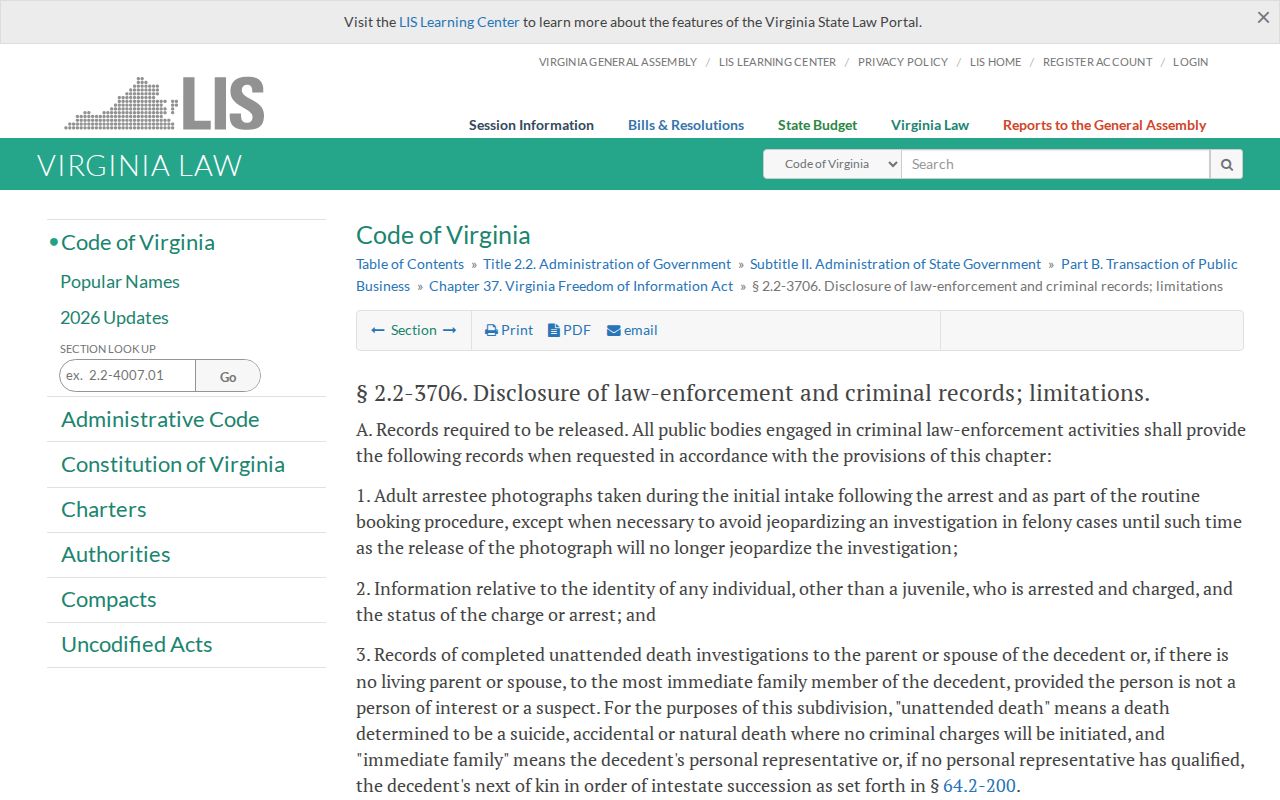
Virginia Code § 2.2-3706 is different. It requires a qualifying criminal-law-enforcement public body to disclose an adult initial-intake photograph on request. A felony-investigation exception applies. That rule governs the local booking layer, not any VADOC profile image.
The adult booking-photo statute explains the local disclosure rule. The Virginia County Directory points to each locality's jail or arresting agency.
Request a VADOC Record
VADOC's FOIA page asks for one thing up front. Describe an existing record with reasonable detail. Inmate records held at a unit go to the responsible unit manager, warden or superintendent, or probation and parole chief. A central FOIA contact path exists too. Some material may be exempt or sit with a different custodian, and the page says so. Virginia FOIA gives five working days. Within that window a public body may cite an exemption, report no record, or invoke the allowed extension instead of sending a copy. Permitted actual costs can apply.
Say which photo you want. Name it as a VADOC identification image or a local booking photograph. Include the full name, DOC number if known, date of birth or another identifier, and the custody or supervision location. Add the record type and date range. That detail lets staff separate a supervision ID photo from a local intake photo. Ask for an existing file only. The department will not build a new profile or search interface for you. If another office holds the record, ask which custodian and whether to redirect the request.
A model request helps. Describe the item as an existing VADOC digital identification photo tied to the named person and supervision period. Then supply the DOC ID and any known unit or probation-and-parole location. That wording separates an internal supervision record from the adult initial-intake photograph governed by a separate disclosure rule.
- Search the current locator and note the DOC ID or location if the person appears.
- Use the VADOC FOIA page to find the central request route or the unit that keeps the existing record.
- Ask for the named document or identification photo and give a date range and useful identifier. Do not ask the agency to create a new photo file or profile.
- Review any response for a cited exemption, a transfer to another custodian, or a permitted cost estimate under Virginia FOIA.
The VADOC Freedom of Information Act page is the official starting point. Local bookings stay with the arresting office or jail.
Note: Virginia FOIA gives the responsible office five working days to respond, though the response need not be a copy if an exemption or extension applies.
VADOC’s Separate Wanted Photos
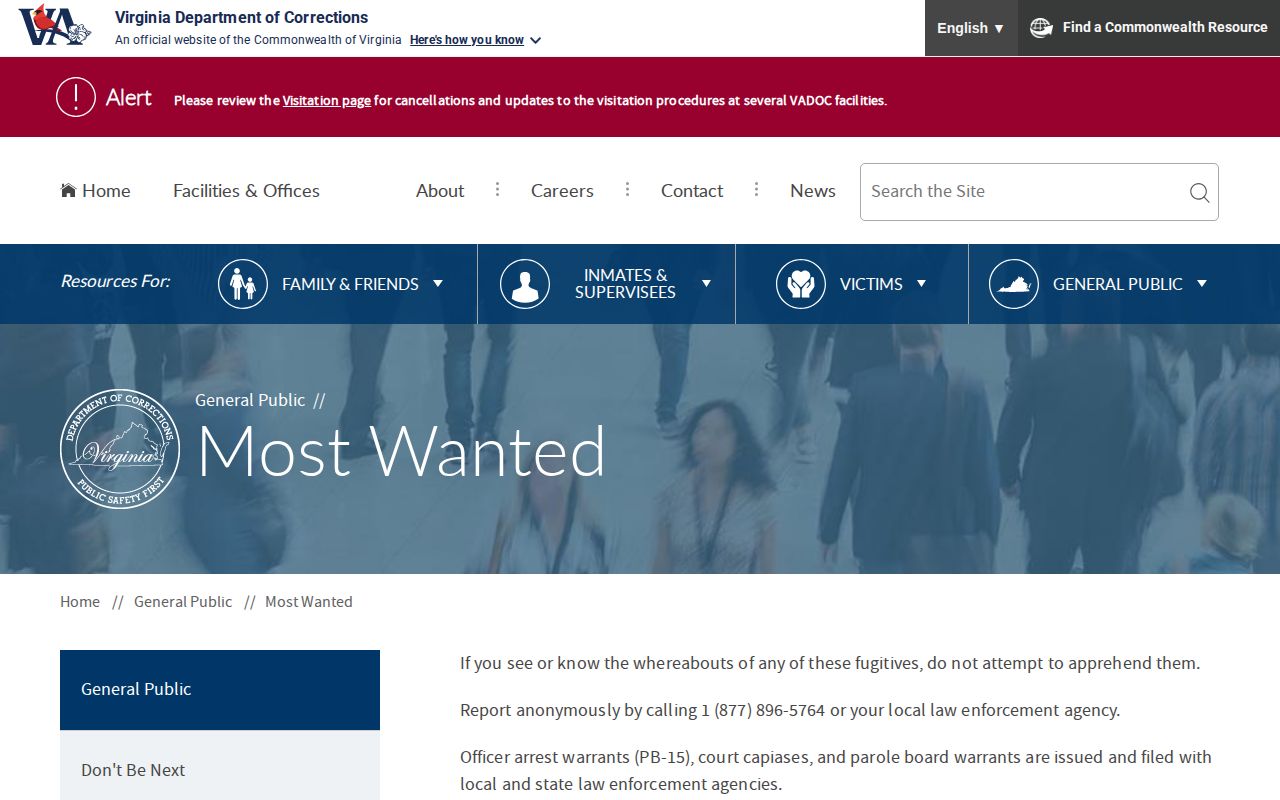
VADOC runs a separate photo service apart from its inmate locator. The VADOC Most Wanted page posts wanted notices with pictures, physical descriptors, and a tip channel. Each entry ties to some kind of warrant. It might come from an officer, a court capias, or the Parole Board. A listing can also track a supervision matter. That makes it different from a state inmate profile. Treat it as a wanted notice, nothing more.
Safety rules apply here. Never try to detain anyone shown on the page. Don't follow or confront them either. Pass along non-emergency tips through the official channel, and call 911 if there's an immediate threat. The live agency page shows which entries are still active.
VADOC Status and Court Results
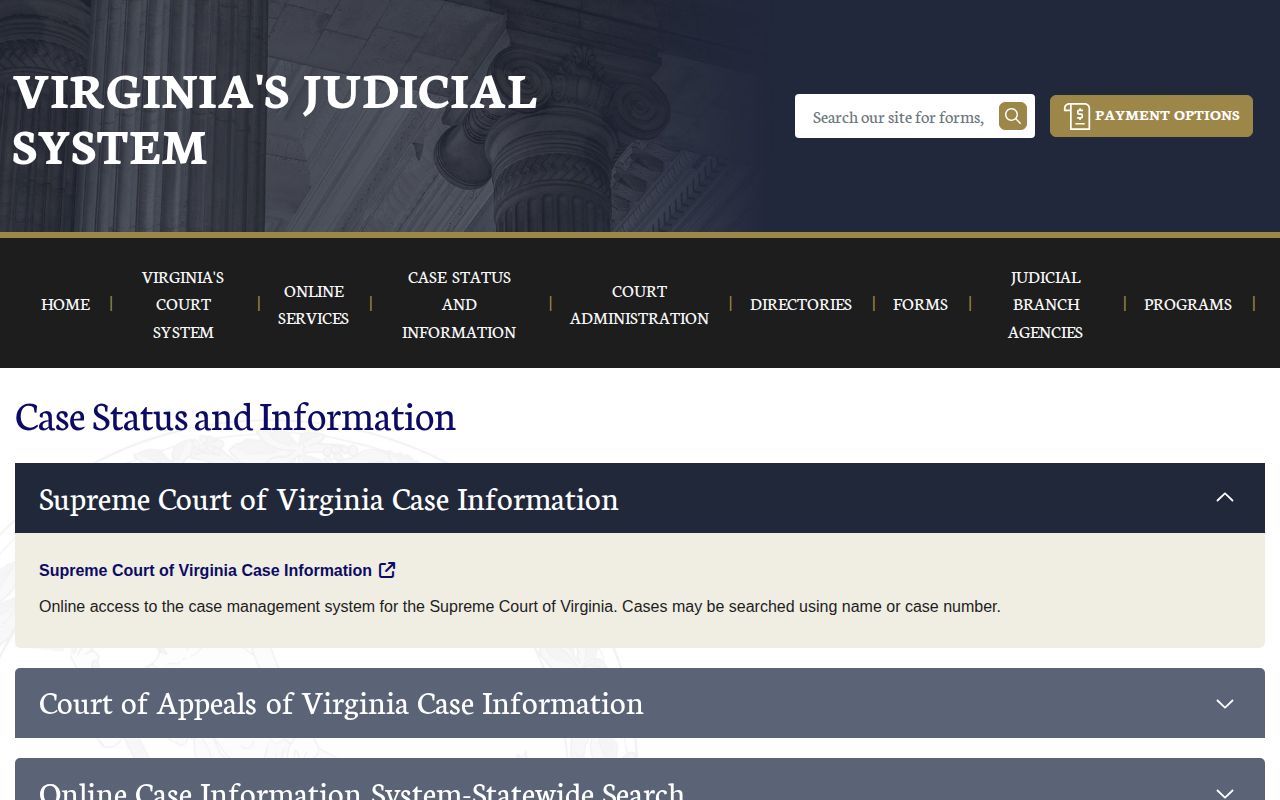
A custody locator only shows where someone sits today. The real case story lives in the court file. A state sentence grows out of the court process itself. The Virginia Courts case-information page is the doorway to those systems. The General District Court portal makes you pick a court first. Then search by name, case number, or hearing date. Circuit courts handle things differently. Each one runs its own setup. Virginia offers no single public circuit search across every jurisdiction.
Outcomes vary widely too. A case can end many ways. It might close with a plea, a conviction, a dismissal, an acquittal, or a nolle prosequi. So don't read a result into an old arrest description or a locator status field.
Federal custody is a different world. The Bureau of Prisons locator reaches federal inmates back to 1982, but it shows no booking photos to the public. ICE holds are searched through ICE's own locator. Neither system will surface a Virginia county jail booking image.
Note: A local booking record can remain with the arresting agency after release even when neither the local roster nor VADOC’s current locator shows the person.
For the wider roster and feed picture, start with the Virginia statewide lookup overview. It maps how to move from the arrest locality to the right local jail system.