
When Virginia Mugshots Are Public
Virginia treats adult booking photos as records you can ask for. Virginia Code § 2.2-3706(A)(1) covers the intake photograph held by a public body doing criminal law-enforcement work. The record is open on request. The single exception is a release that would jeopardize a felony investigation. The statute says nothing about publishing, either. No sheriff, police department, or jail has to run a public photo page, which is why local sites look so different. The state rule governs access, not a statewide publishing schedule.
The same section reaches more than pictures. It also opens the identity of anyone other than a juvenile who was arrested and charged, plus the status of the arrest or charge. Juvenile files follow separate confidentiality rules. Exemptions still bite. An agency may withhold a field under an applicable exemption, so a public result can come back thinner than the file on hand. Ask the custodian, not the portal. A public listing is rarely the whole record.
The adult-photo rule sits in the Virginia Code’s law-enforcement records section, where the full text spells out each term.
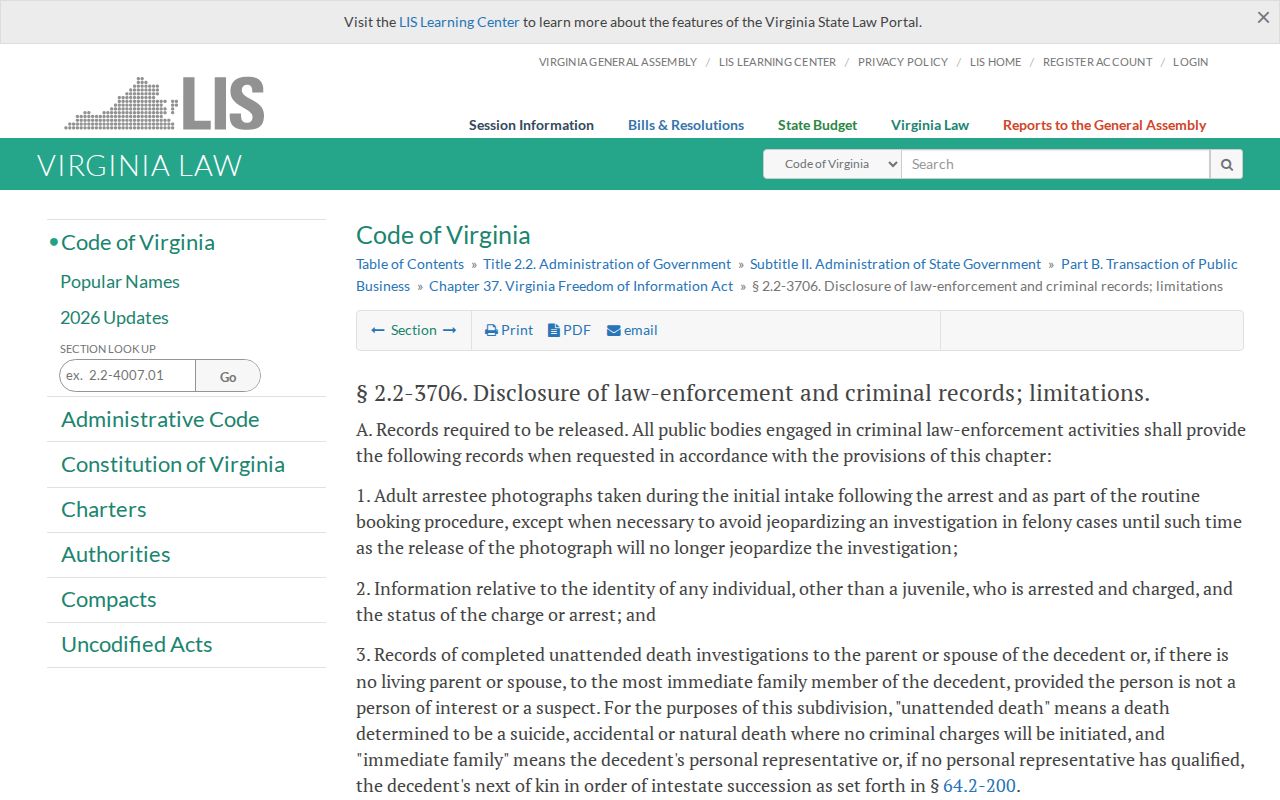
A booking photo records an arrest event. The charge and its outcome live in the court file, not the image.
Virginia Mugshot Access Rules
Virginia FOIA starts from a simple premise. Public records are presumed open unless an exemption applies, and exemptions get read narrowly. Section 2.2-3706 layers on the criminal-law-enforcement rules. Section 2.2-3706.1 governs investigative files. It gives agencies extra discretion while a matter is active. A custodian may withhold material under a specific exemption. Even so, the office should name the legal basis rather than offer a vague refusal.
Virginia Code § 2.2-3704 sets the response clock. A public body gets five working days to answer a record request. Its options are limited. The office can provide the record, cite an exemption, or report that no responsive record exists. It can also invoke the statutory extension. Truly huge requests can trigger further steps. The agency may charge permitted actual costs. In the conditions the law sets, it can send an estimate. It can also ask for a deposit. Building a new report or statewide photo index is never required.
The 2015 anti-pay-to-remove law works differently. Section 8.01-40.3 creates a civil claim against anyone who disseminates, publishes, or maintains criminal-history information about an arrest or charge. The claim also covers soliciting money or another thing of value to remove it. The remedy runs to actual damages or $500, whichever is greater. Reasonable attorney fees and costs are added.
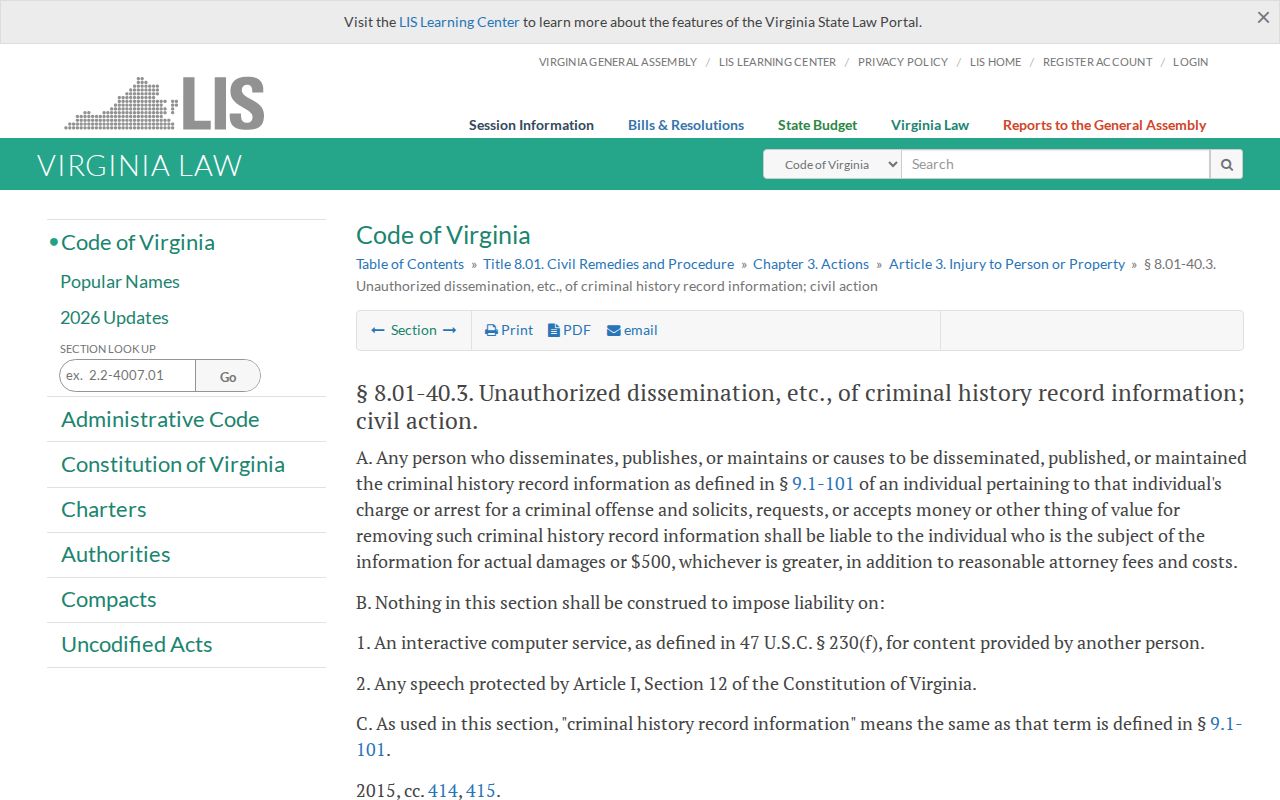
This statute is not a general takedown program. Nor is it a criminal penalty. It carries limits of its own. Some interactive computer services get special treatment, and speech protected by the Virginia Constitution sits outside the law’s reach. Those clauses call for legal analysis tied to a particular dispute. For history, the Virginia Code page records the 2015 enactment.
Virginia Arrest Records to Check
No photo on the local site does not mean a dead end. Other official records answer different pieces of the question. A jail roster shows current custody, where the locality publishes one. The arresting agency holds its case file. That file may hold the routine photo too. Virginia Courts can display the later case status where online access is offered. VADOC covers state custody and supervision. Its public locator offers no general offender-photo profile, though.
Match the search to the record type. A roster name tells you about one jail system, a court docket reports court events, and a written request asks an agency for an existing file. Sources update on their own clocks, so a released person can vanish from a current-custody roster while the booking record stays with the agency.
- Identify the Virginia locality and agency that made the arrest. If the person went to a regional jail, note that the arresting agency and custody agency may differ.
- Check the official jail or sheriff roster for current status and the local police or sheriff records page for its request process.
- Use the Virginia court that heard the case to verify the charge and final disposition. Online circuit and juvenile access is not uniform statewide.
- If the question concerns state custody or supervision, search the VADOC locator. Do not treat that search as a source of a county booking photo.
- When a web page does not show the needed record, make a narrow FOIA request to the agency that holds it and ask for the specific existing record.
The Virginia statewide record and lookup overview explains how local roster patterns differ. It also routes readers to the locality directory.
Why Virginia Photos Are Missing
The statewide review of 107 locality research files found five arrangements: current-custody searches with a photo, vendor systems where an image field is conditional, text-first rosters, no verified public roster, and a photo released only with a news story. A site can show a person’s name without an image. A photo can also be held by the arresting agency while the jail’s vendor page has no public image field.
This variation matches the request-based statute. Some places publish more than the state requires; others do not offer a public image search. Rural localities often share regional jails, while larger cities and counties more often provide browser searches. That is a qualified pattern from the local research, not a rule that every city posts photos or every rural sheriff does not. Check the official custodian for the person’s actual booking location and record.
A news or press image is selective coverage. It may come from an agency release, may be older than the booking at issue, and does not act as a current roster. Third-party pages can copy a government or news image after the original result has changed, so treat them as secondary and confirm dates and status with official sources.
Sealing Virginia Arrest Records
Virginia's adult sealing framework took effect July 1, 2026. Some categories seal automatically. Statutory conditions must be met first. The automatic list covers specified misdemeanors and certain non-convictions at case conclusion. A felony non-conviction category adds request and Commonwealth-concurrence conditions. Check Title 19.2, Chapter 23.2 and the current court instructions rather than assuming a dismissal or old charge disappears on its own.
Petition sealing reaches further. It covers eligible misdemeanors, deferred dismissals, and certain Class 5 or Class 6 felonies and larceny matters. The statute builds in lookback periods, restitution and conviction limits, exclusions, and a two-grant limit. The general lookback is seven years for eligible misdemeanor convictions. Eligible felonies wait ten years. Prior felony categories can create longer or permanent barriers.
The Virginia State Crime Commission overview describes both paths. Sealing restricts public access to covered arrest, charge, or conviction records in courts, law-enforcement systems, the DMV, and the Central Criminal Records Exchange. Once an order applies, covered agency access to the related booking photo should be blocked too. Expungement, by contrast, remains a separate petition process for qualifying acquittals, nolle prosequi matters, and dismissals.
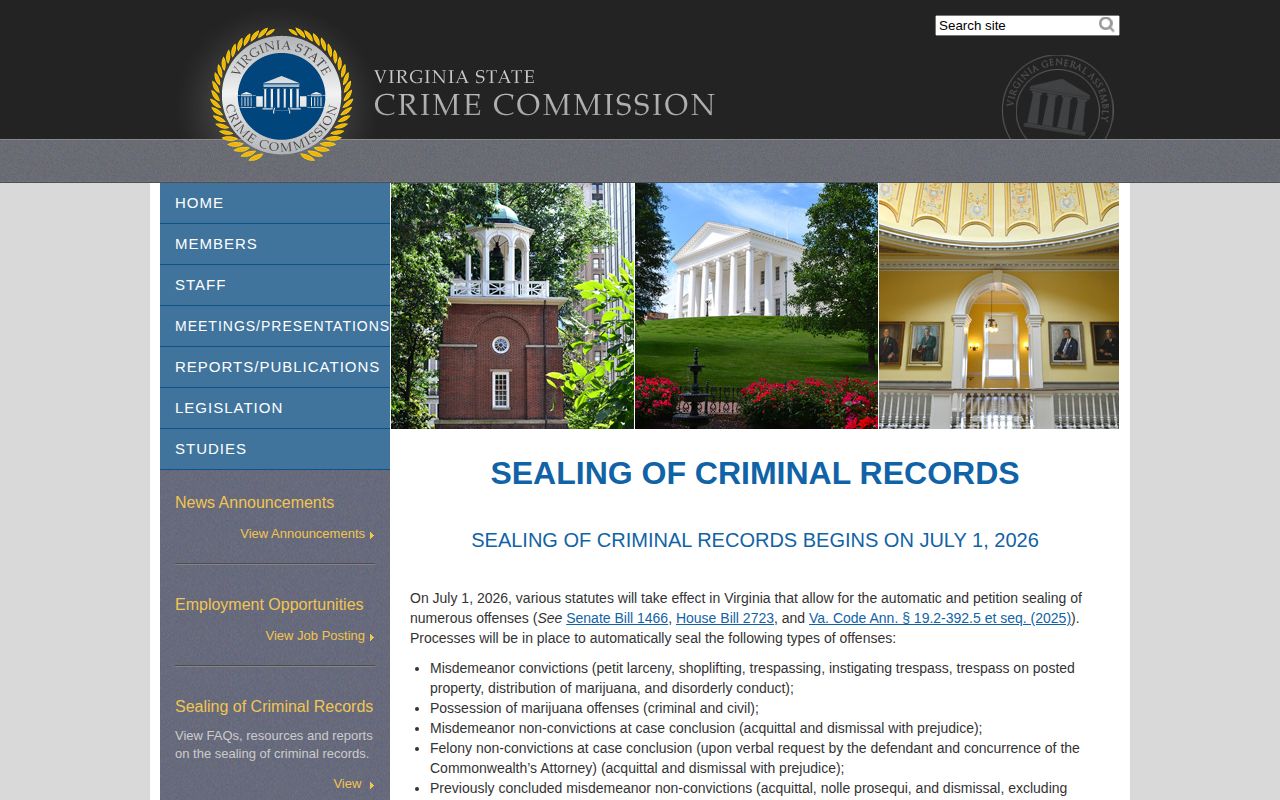
The state's sealing FAQs note that private publishers do not all hear automatically. Virginia State Police keeps a separate implementation page for law-enforcement records. Keep your copy of the order. Ask the original agency first. Then contact each private publisher still showing the exact record. Attach the order or final disposition. A search engine can hold a stale snippet after the source is corrected. Its removal process is separate.
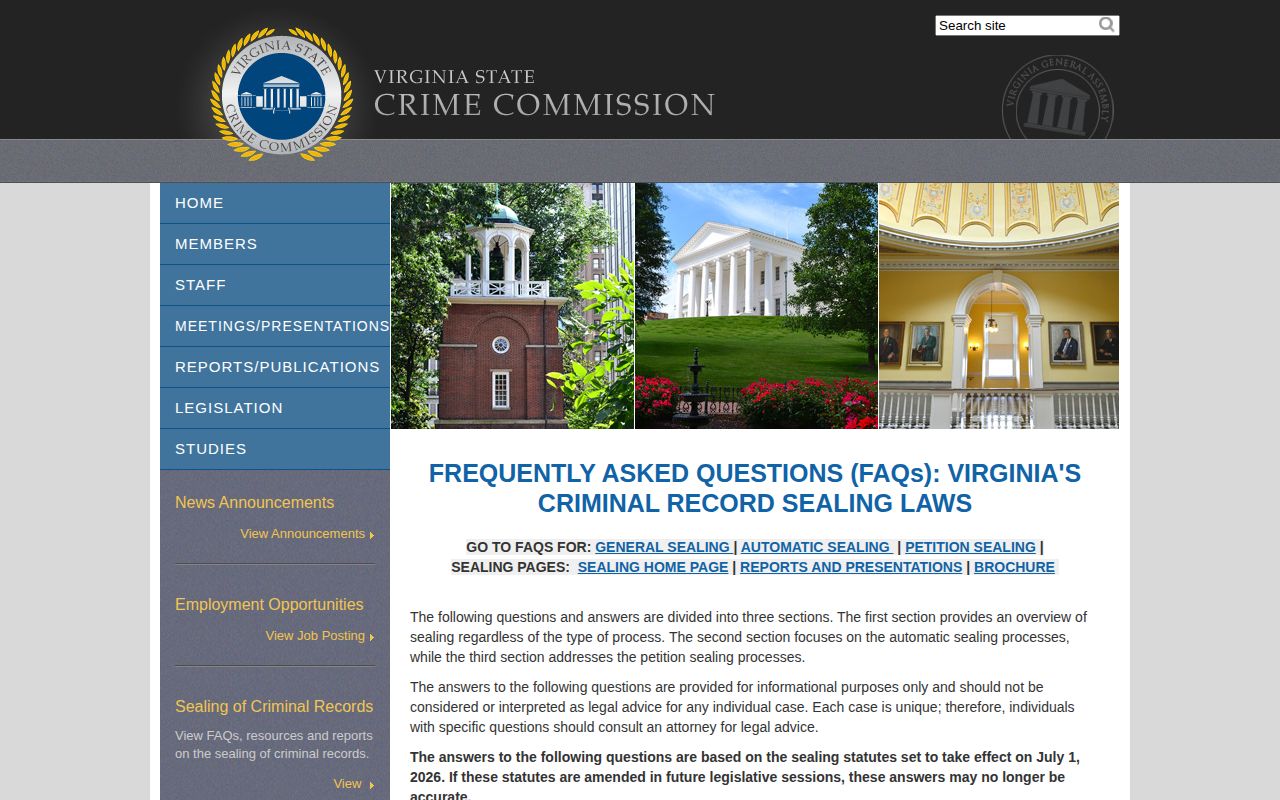
Do not promise that an order erases the whole internet. The real result is narrower: a government record is sealed or expunged under the order and should not be publicly disclosed through the covered system. A publisher correction, a government sealing order, and a search-engine stale-content request are separate actions.
Virginia Juvenile Record Limits
Juvenile law-enforcement records stay confidential in Virginia. They are kept apart from adult files. Virginia Code § 16.1-301 carves out one narrow exception. It applies when a person fourteen or older faces a violent juvenile felony charge and the statute's conditions are met. Juvenile photographs may be taken in some qualifying cases. Even so, that does not turn them into ordinary adult booking images. Juvenile court files follow their own confidentiality rules.
A second, narrow exception exists for identifying a fugitive. A court may authorize publishing identifying details to help catch a juvenile fugitive in a felony-equivalent case. The Department of Juvenile Justice may release an image under the conditions in § 16.1-309.1. None of that permits collecting juvenile mugshots into a general feed. No juvenile booking photos are displayed.
A missing result can mean many things. Think of a juvenile restriction, a sealed or expunged record, an active investigation, a specific exemption, an agency that does not hold the file, a portal lacking an image field, or removal under a schedule. Rely on the reason the custodian gives, since an absent online result never proves the record does not exist.
Free Virginia Publisher Corrections
Private publishers write their own correction rules. Each one sets its own bar for proof. A site may update a page rather than remove it, or decide a record falls outside its policy. The agency and the court still settle custody and case outcomes. Never pay a removal broker. Guaranteed results are a red flag. Virginia civil law addresses demands for value to strip criminal-history information, though it is no shortcut around the publisher's free route.
Busted Newspaper's free request asks for the exact page, the requester's relationship to the record, contact details, and a reason such as a mistake, dismissal, sealing, or acquittal. Review may take several days. Legal proof can be required.
Recently Booked's policy keeps removal, suppression, and modification requests free. Possible grounds include sealed or expunged material, errors, outdated entries, duplicates, juvenile items, and wrong-person pages. Give the page URL, the name, the arrest date, the state and county, your reason, and any supporting documents.
Mugshots.com's record-maintenance process takes free requests for sealed, expunged, or incorrect material and updates pages from court documents. Its window runs to ten business days. Arrests.org's free form wants a name, email, record links, and supporting details. For a Mugshots.zone locality page, use its own removal link and supply the exact address plus a legal order. The state-level route can change. Its policy lists no fee for that request.
Newsrooms work differently. WTVR and WSLS offer no guaranteed mugshot opt-out. Send the exact story URL with a disposition or sealing order through the outlet's own contact route. Ask for a correction or an update review. A newsroom may annotate the story, update it, or leave it alone.
When Virginia Mugshots Change
A good records request names the person, the arrest date, the arresting agency, and any case or booking number. Ask for the adult initial-intake photo or the specific record that body holds. FOIA does not force an agency to build a new database. If a record is withheld, ask for the exemption. Another agency may hold a copy.
The five-working-day clock and the permitted costs sit in Virginia Code § 2.2-3704. An existing record can vanish later. Sealing, an exemption, or retention rules can explain why. The Library of Virginia's current schedule for local and regional jail incarceration files allows three years after separation before confidential destruction. A private copy can outlive the government record. Archive copies may follow separate rules.
Break the record question into parts. Ask what the agency holds, whether the statute or an order allows public access, whether a publisher copied it, and what the final court result was. Each part has its own answer. The index covers the statewide route. The VADOC offender search page explains how the state layer works.