
Virginia Busted Mugshot Records
A mugshot gets taken when someone is booked after an arrest in Virginia. The police or sheriff who made the arrest may hold the case file. A local or regional jail handles the actual custody. That split matters. The roster, the arrest report, and the booking photo are connected records. Yet no single statewide file ties them all together. People move between agencies or get released quickly. The right office to ask depends on where the arrest happened and how far custody has gone.
State law takes a specific approach to these images. An adult's routine intake photo, held by a qualifying law-enforcement body, must be released on request. Release can be refused only when doing so could harm a felony investigation. Posting photos online is another matter. The rule does not require any locality to publish them. One county site might show current photos. Another might return names only. A third may offer no public search at all. A blank result online simply means nothing was posted there.
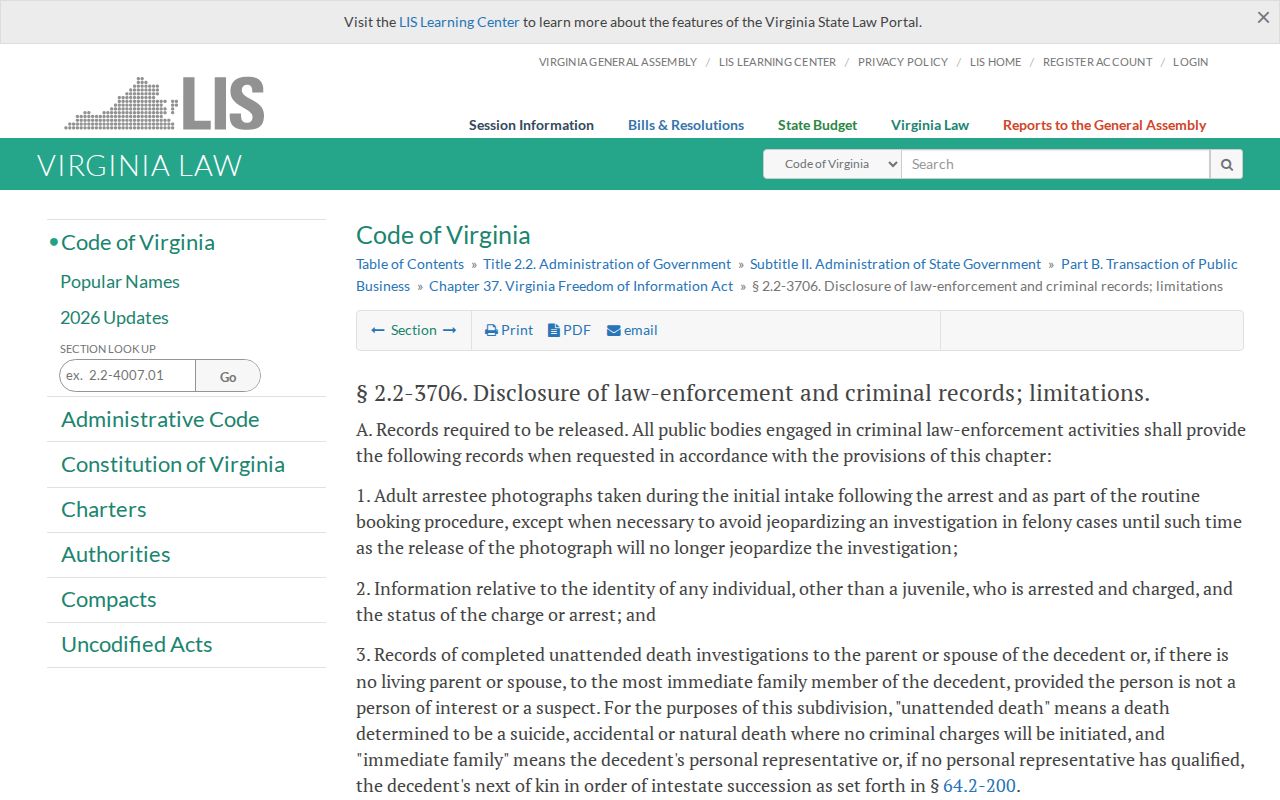
The details sit in § 2.2-3706 of the Virginia Code. That section covers the identity and charge status of an arrested person too. Separate limits apply for juveniles and for open investigations.
A booking entry marks one intake event at one jail. It reflects the arrest as it happened that day. Court records come later and carry the outcome.
Virginia Booking Record Fields
What shows up in a local booking record varies. Depending on the system, you may see personal details. You may also see the charge as first booked and the jail's custody status. Some fields stay hidden. A portal can omit the photo, the address, the charge detail, or a release event. The public roster is a window into one system. It is not a guarantee that everything the agency holds appears on screen.
State prison records work differently. The Virginia Department of Corrections runs its Inmate and Supervisee Locator. It covers people in VADOC custody or under supervision. It returns identity and status information rather than a booking-photo profile. Keep these two record layers separate when searching for a person.
| Record field | What it can show | Record layer |
|---|---|---|
| Name and identifier | Name, booking or jail number, or VADOC DOC ID used to distinguish records. | Local booking or VADOC |
| Event details | Arrest or booking date, arresting agency, court, or case number when the agency includes it. | Local booking |
| Charge and bond | Charge as entered at intake and bond or release terms when shown. These are not a court finding. | Local booking |
| Photo | Routine adult intake image if held and publicly disclosed. Online display varies by locality. | Local law enforcement |
| Custody status | Current location, supervision status, or release date, depending on the system. | Local jail or VADOC |
| Court result | Dismissal, acquittal, plea, conviction, nolle prosequi, or another case disposition. | Court file |
The VADOC locator offers separate search fields along with status details, though it includes no general public photo profile. That state record layer is explained in the VADOC guide.
Request Virginia Busted Booking Photos
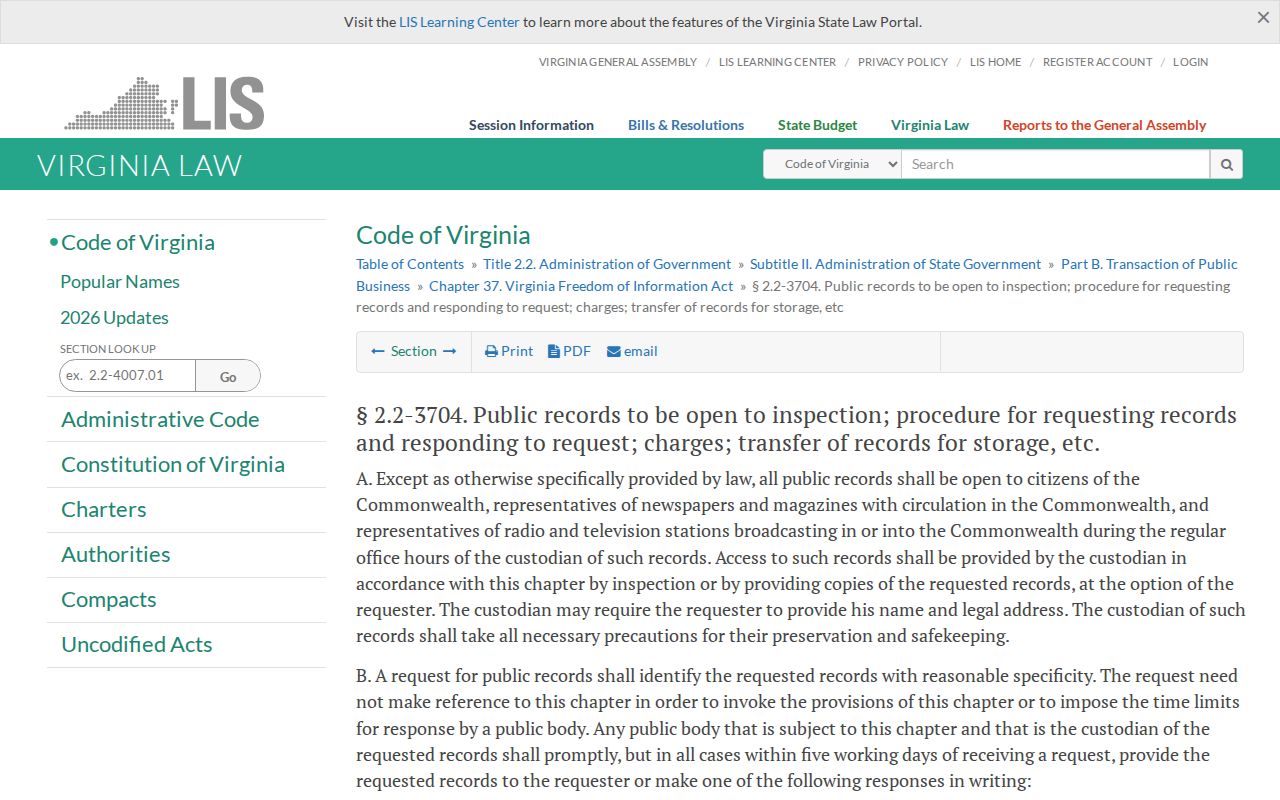
Virginia's FOIA keeps the ask simple. Describe the record you want with reasonable detail, and the agency takes it from there. Under § 2.2-3704, a public body has five working days to respond. Its options are fixed. The agency can hand over the record, claim an exemption, say nothing responsive exists, or take the extension the law permits. Fees are limited to allowed actual costs. An advance estimate or deposit may come into play where the statute allows it. Keep in mind that no agency has to build a new statewide report for you. The Virginia FOIA request statute page lays out both the law and the clock. A narrow request beats a sweeping one every time.
Start with the basics when seeking an adult booking photo or local busted record. Name the locality and the arresting agency if you know it. Add the likely jail and an approximate date. A booking or case number helps. Request the existing intake photo. Ask for an electronic copy if that is how it is stored. If something gets withheld, ask which exemption the office is relying on. Custody is often split among the sheriff, the police department, and the regional jail. The office may point you to the right custodian.
- Use the locality directory to identify the official sheriff, police department, or regional jail that may hold the record.
- Name the existing record, person, date range, and any identifier you know. Ask for the record in electronic form when available.
- Send a separate, specific request to VADOC for an existing state record. Its FOIA page explains the central route and the option to contact the unit that keeps a record.
- Compare any booking entry with the court file. Keep the response and any fee estimate with the record details.
The VADOC locator shows status. It cannot fetch a local jail photo. A state ID photo in VADOC's files, if one exists, is a separate record from a county booking image. For state records, use the agency's VADOC FOIA request route and describe what you need with reasonable detail.
Virginia Mugshot Law and Sealing
Virginia FOIA starts from openness. Most public records are available unless an exemption applies. Section 2.2-3706 governs adult intake photos, identity details, and charge status. One carve-out applies when release could jeopardize a felony investigation. Juvenile records sit under a separate confidentiality framework of their own.
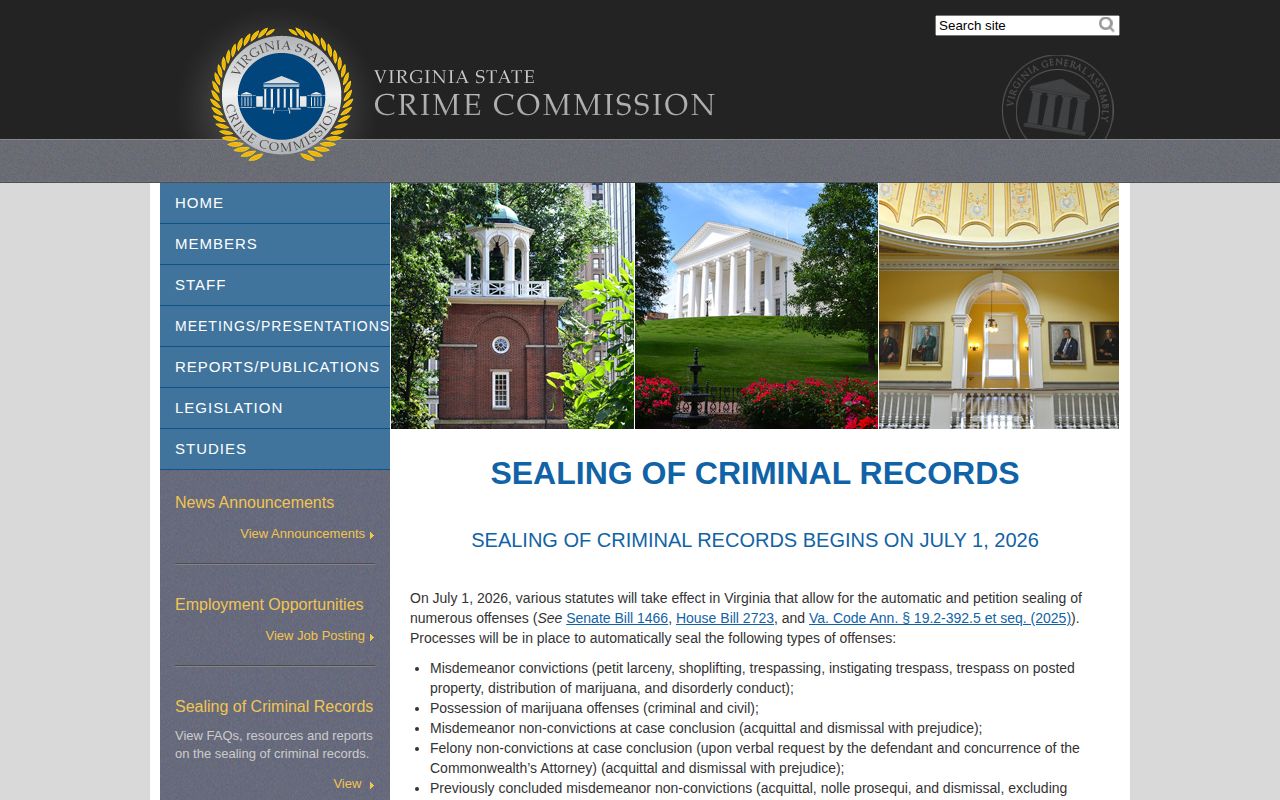
A new adult sealing framework took effect July 1, 2026. Some records seal automatically once statutory conditions are met. Others need a petition and court review, with case-specific rules attached. Sealing restricts public access. It reaches courts, police and sheriff departments, the DMV, and the Central Criminal Records Exchange. Expungement stays a separate court process for qualifying non-convictions. Everything turns on the exact charge and outcome. Anyone considering it should work from the current code and court instructions.
The State Crime Commission explains how automatic and petition-based sealing work. An order changes the government record. Private copies and search results do not update instantly. Keep the order. Send it to the original agency and contact each publisher still showing a copy. A stale search snippet may need its own request after the source page changes.
Virginia Code § 8.01-40.3 creates a civil claim. The claim arises when someone demands money or value to remove criminal-history information about an arrest or charge. The remedy can include actual damages or $500, whichever is greater. Reasonable fees and costs may also be awarded. Its limits for service providers and protected speech require case-specific legal analysis. The civil-remedy statute is not a publication ban or a state takedown program. For the full legal distinctions and free publisher correction routes, see the Virginia mugshot law guide.
Does a missing online photo mean the agency has no photo? No. State law can require a photo anyway. That holds even when a local portal lacks a photo field. Ask the official custodian what record exists.
Find Virginia Busted Mugshots
Start with custody and jurisdiction. A recent arrest normally begins with the police department or sheriff that made it. The receiving jail may belong to a different locality or a regional authority. So find the arresting jurisdiction first. Then identify where the person was booked. The county line alone will not tell you which jail holds the record.
- Choose the locality where the arrest happened, then check its official sheriff or police site for a jail or inmate search link.
- Search the responsible local or regional jail roster. Use a full name and narrow by date or booking number if the page offers those fields.
- If the person has left local custody, ask the arresting agency for the booking record and photo. The current roster may no longer list a released person.
- For state prison custody or state supervision, use the VADOC locator. For a court outcome, search the court system that heard the case.
- If the web search has no record or image, send a focused request to the official custodian. Do not treat a missing result as proof that no arrest or record exists.
Some searches return a name with no photograph. Others show current custody only, and a person can walk free before your next check. That makes a roster the right tool for a current jail-status question. A formal request works better for an older event or an image the portal never shows. Aggregate crime reports describe statewide trends. They cannot confirm an individual arrest.
Official Virginia Arrest Search Paths
Go to official records first. Each one has a defined custodian and purpose. A local roster covers a jail's current population or recent bookings, depending on how that system is built. Courts display case events and dispositions, while state and federal locators cover their own custody systems. None of them is a universal Virginia mugshot database.
| Source | What it can answer | Photo role |
|---|---|---|
| Local sheriff, police, or jail | Recent arrest, booking, or current local custody; agency and retention rules vary. | Some pages show photos, some do not. Request an existing adult intake photo from the custodian. |
| Virginia Courts | Adult case events and disposition where that court’s online service is available. | Not a booking-photo source. |
| VADOC | State custody and supervision, including state institutions and probation or parole. | The current public locator has no general photo profile. |
| Virginia State Police | Official wanted-person notices and agency tip routes. | Selected wanted notices may carry a photo. |
| Federal BOP or ICE | Federal prison status or current/recent immigration custody within each locator’s scope. | Neither locator is a public mugshot gallery. |
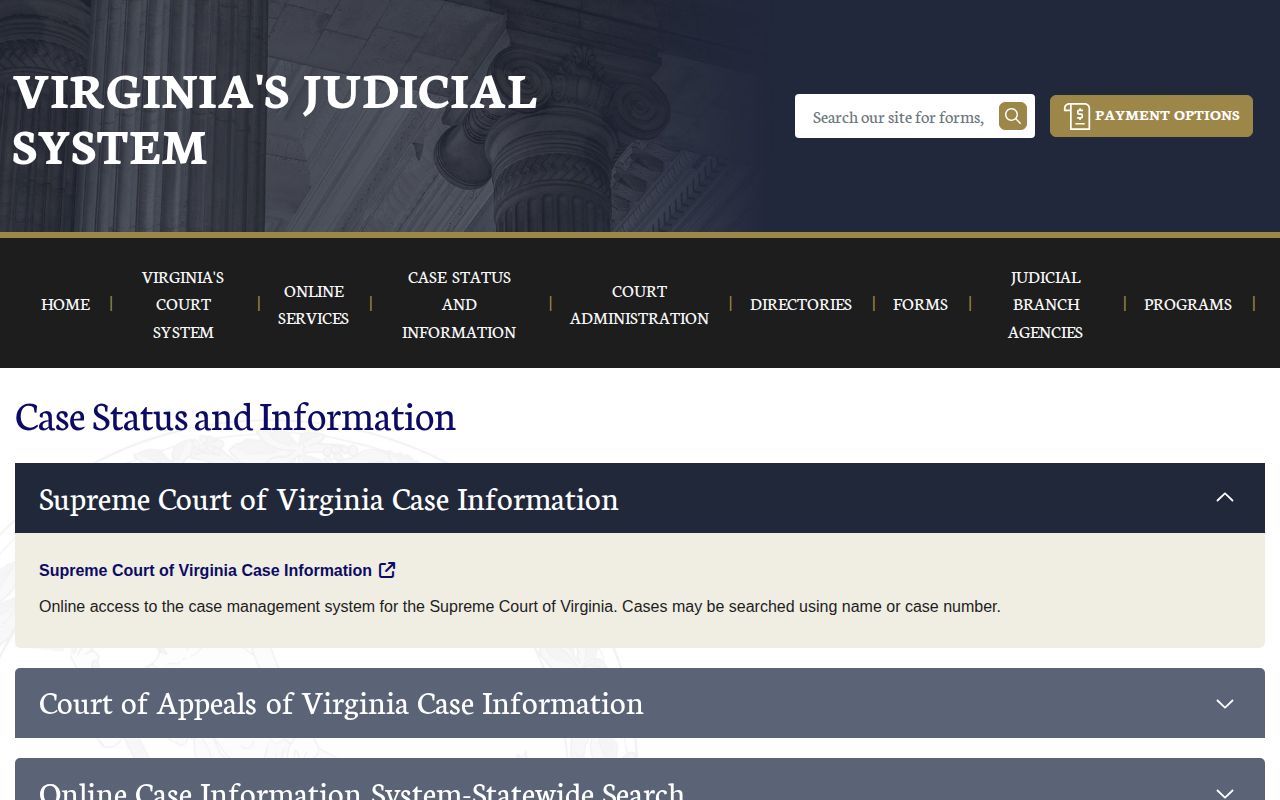
The official Virginia Courts case-information page links to adult General District Court services. Selected circuit systems appear there too. It is not one search spanning every circuit court. Juvenile and Domestic Relations information appears online only where a court chooses to post it. No statewide public JDR search exists. The court screen tells you case status. It does not say where a booking image is held.
Virginia Busted Roster Patterns
Local systems handle booking photos in five common ways. Big cities and counties often run a browser search or a current-custody page. Some jurisdictions pool their resources into a regional jail portal. A vendor screen may show an image area, yet not every record carries a photo. The smallest localities skip the online roster and ask for a phone or written request.
None of this tells you how complete a record is. A page with photos can still lag behind or drop a charge field. A plain text roster can be the official current-custody list with no image at all. A press photo is chosen for the news, not pulled from routine intake. That routine intake image is the one § 2.2-3706 addresses.
| Roster pattern | What to expect |
|---|---|
| Photo-bearing result | A current-custody record can include an image, but confirm the booking and status with the custodian. |
| Conditional image field | A vendor supports photos, but the agency may not display one for every person. |
| Text-first search | Name, status, booking date, or charges may appear without a verified photo field. |
| No verified public roster | Use the responsible jail or sheriff records route. Lack of a web search is not lack of a record. |
| News or press image | A story may use an agency-provided photo for one event, not a complete jail list. |
Regional jail borders can cross locality borders. A county's sheriff may make the arrest while a regional authority holds the person and publishes the custody result. Use the locality directory to reach the correct official local site, then follow its link to the jail that actually holds the person.
Virginia Busted Arrest Feeds
No single statewide feed exists for Virginia jail bookings. Each local page sets its own rules. One roster may drop a name the moment the person walks free. Another lists new intake events for a fixed window and then lets them age out. Some sites keep released people for a stretch. Others show only current custody. Juvenile matters, sealed cases, and unpublished details simply stay off the feed.
Posting schedules swing by locality too. Weekend surges and archive depths differ from one jail to the next. No consistent feed window holds across the state. If a local page gives no post time or date range, do not guess one. Avoid guessing from a third-party copy of the roster. Go to the agency's own page. Ask the records custodian when you need a date-specific arrest search.
Official apps split the same way. Hampton's app listing advertises inmate search with real-time information. Roanoke City documents Sheriff Connect. Pamunkey Regional Jail posts an app link in some served localities. Plenty of other tools handle news, tips, visitation, or deposits rather than photo search. Virginia VINE sends custody notifications where the agency and event are covered. It posts no mugshot gallery and no court result. Always check an agency's own app link for the feature it actually claims.
For statewide numbers, use the Crime in Virginia report. It publishes aggregate arrest statistics by offense and category. Use it for context, not to locate one person. Local portal totals share no common window or custody definition. Ranking the busiest locality would take a consistent dated dataset that does not exist.
VADOC Search and Photo Requests
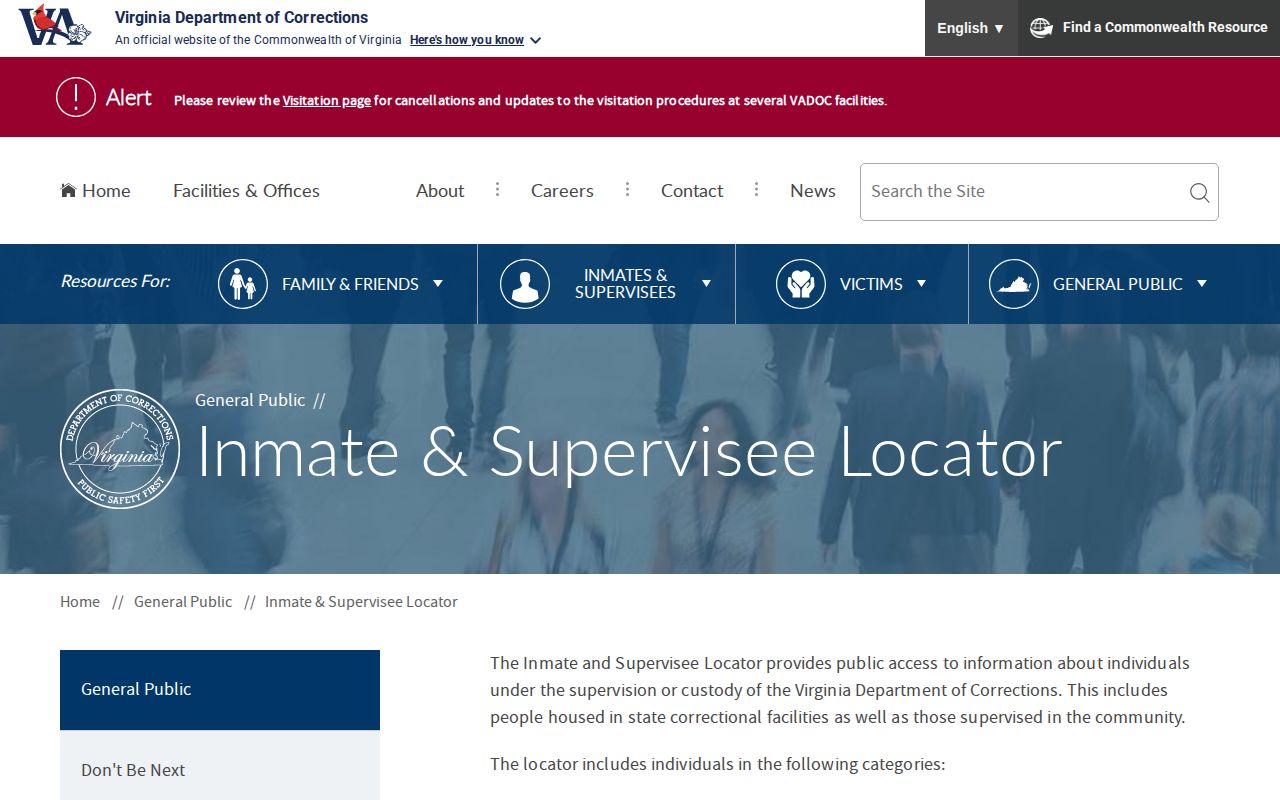
VADOC's locator handles both state custody and supervision. Search by a seven-digit DOC ID, or by a name using the first three letters of the first name plus the full last name. Advanced fields cover location, race, gender, and age. Results return status details but no general offender photo. VADOC itself warns that daily updates can still be inaccurate or outdated. The VADOC Inmate and Supervisee Locator page shows its official entry point and scope without requiring a public result page.
Operating Procedure 920.1 covers digital identification photos for probationers and parolees. Photos get updated when appearance changes significantly. That is an internal procedure. It is not a public display schedule. A former offender may vanish from a current locator. To request a specific existing VADOC file, use the agency's FOIA route. Local booking images belong with the jail or arresting office.
Virginia Court and Federal Records
Virginia's General District Court search makes you pick a court first, then lets you search by name, case number, or hearing date. Circuit court access is scattered across local systems. No statewide online case search covers every circuit. JDR access is limited by law and local availability. A case result can show the later path of an arrest charge, but the disposition must come from the right court. An acquittal, dismissal, plea, conviction, and nolle prosequi each mean something different.
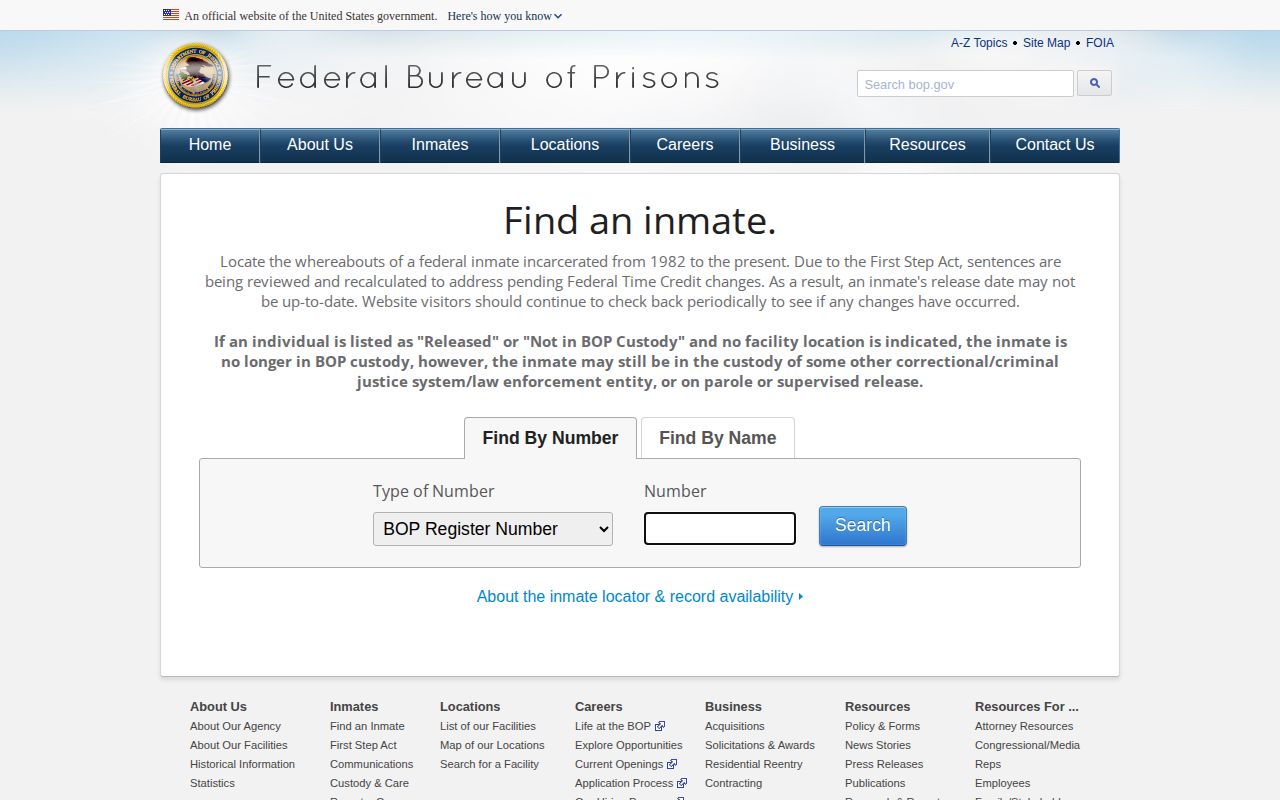
Federal custody adds another layer. The Bureau of Prisons locator reaches federal inmates back to 1982. Search by name or register number. It shows age, race, sex, release date, and location, but no public booking-photo field. Older federal records may need a separate archives request. The BOP locator is the official starting point for current federal prison records, and its search interface identifies the fields that system uses.
The ICE Online Detainee Locator covers people currently in ICE custody or certain recent CBP custody. Searching takes an exact A-number and country of birth, or an exact full name with country and date of birth. Children are excluded. No public booking photo comes back. A federal or immigration result says nothing about whether the person also has a Virginia local case. Check the matching court and custodians separately.
Virginia Wanted Lists and Warrants
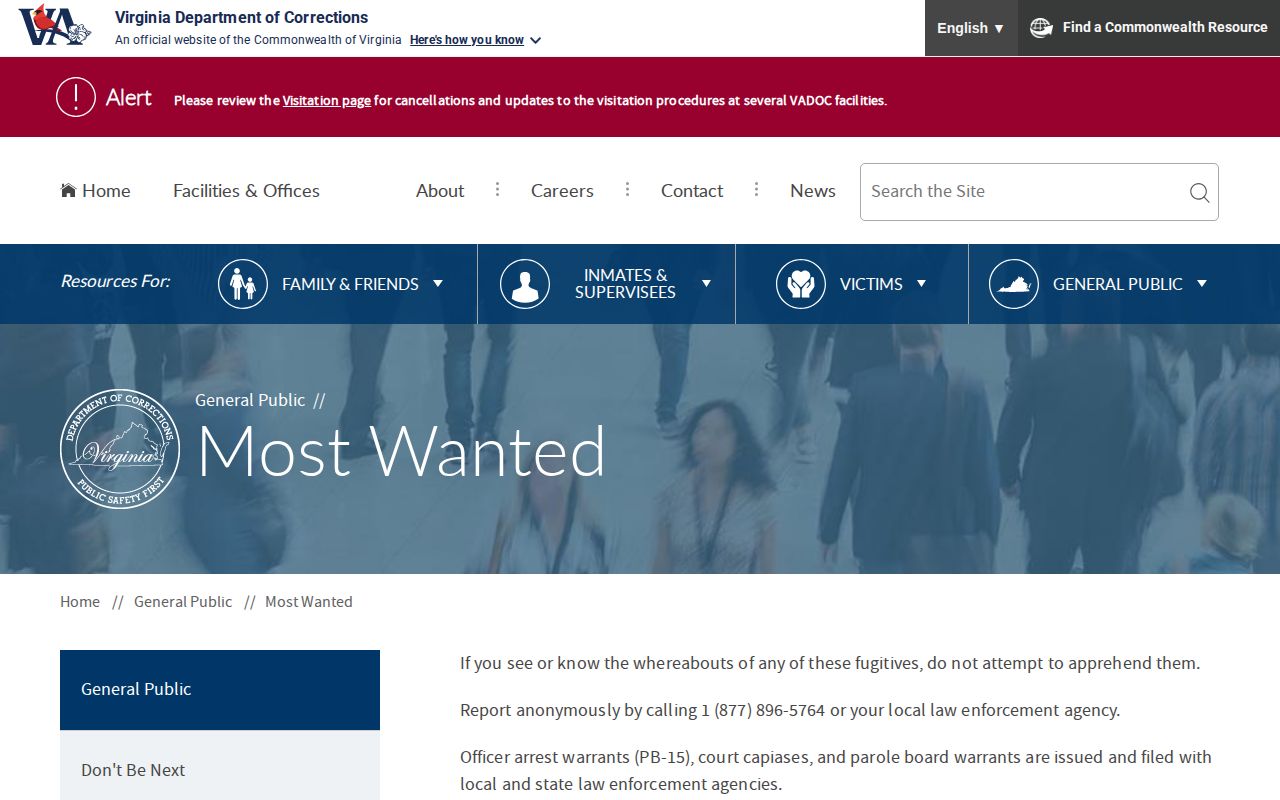
The Virginia State Police Wanted Persons page serves as the official statewide notice source. VADOC runs its own photo-bearing Most Wanted list, which may show an image and descriptors for someone with an officer warrant, court capias, or Parole Board warrant. U.S. Marshals district and national lists track federal fugitive work. Each page belongs to a different agency. Entries change independently as a person is located or a warrant status shifts.
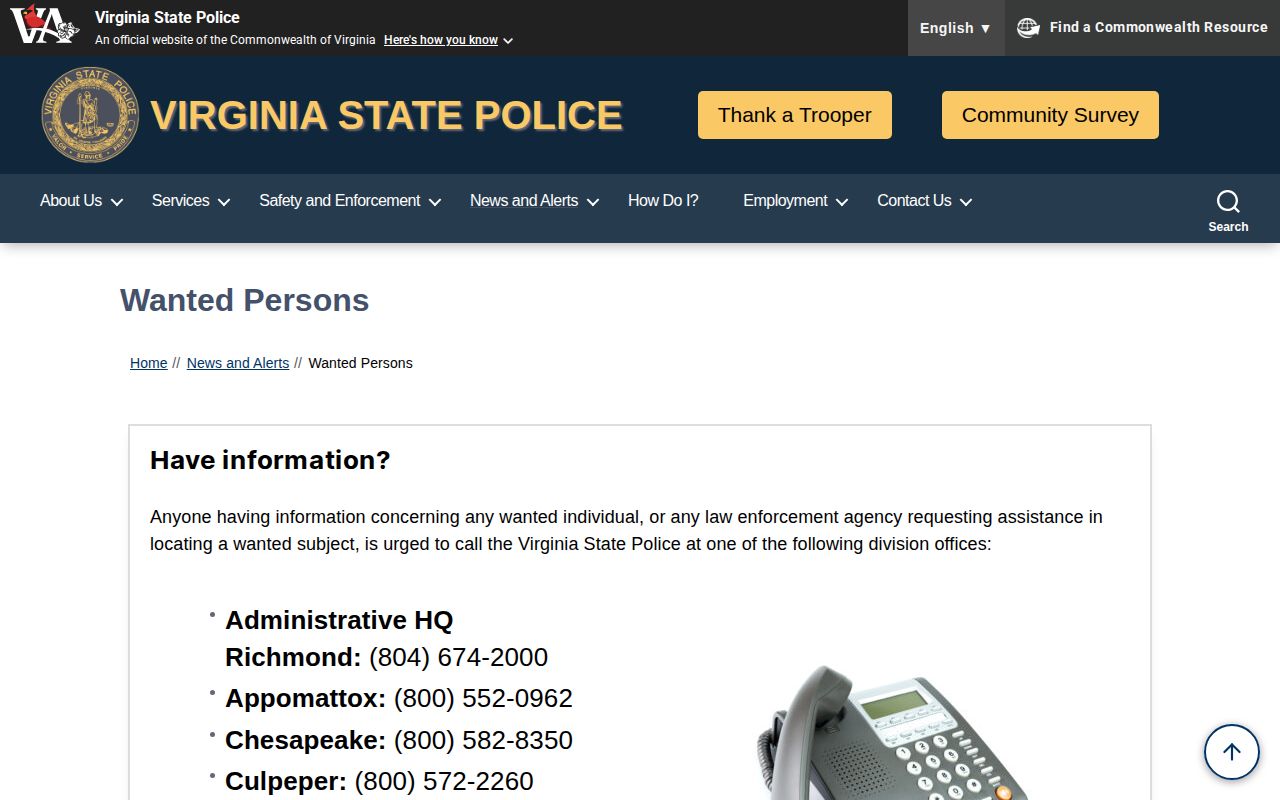
Both services keep their own live entries and tip lines. Never rely on an old copy. Do not act on a notice yourself.
To check a particular warrant, use the issuing court or the responsible local agency and verify it is still active. Virginia courts offer no single statewide public search spanning all warrant types and courts. Never approach, follow, or confront anyone on a list. Send a non-emergency tip to the named agency instead. Call 911 for an immediate threat.
Busted, Released, or Sentenced
These records mark different points in the process. A person can leave the jail while the arrest record stays with the agency. A state sentence changes the custody search path, yet the booking entry still describes the original intake.
| Stage | Best first source | What it may show |
|---|---|---|
| Just booked | Arresting agency and receiving jail | Recent arrest or booking entry; photo display depends on local policy. |
| Still in local custody | Local or regional jail roster | Current location or status, perhaps a booking date and charges. |
| Released | Arresting agency records unit | Existing booking record and photo may remain obtainable even after the roster entry disappears. |
| State sentence or supervision | VADOC locator | State custody or supervision details; no general public photo profile. |
| Federal or ICE custody | BOP or ICE locator | Only the federal prison or covered immigration custody status. |
How Virginia Busted Records Age
Retention rules for Virginia busted records vary by series. The Library of Virginia's local schedule keeps jail incarceration records, photos included, for three years after separation. Confidential destruction follows. The state law-enforcement schedule runs longer, holding adult and juvenile booking fingerprints and photos made available to CCRE on a separate clock. Retention never promises online release.
Older material sits elsewhere. The Virginia Penitentiary collection holds registers and prisoner photographs or negatives, with access restrictions of its own. It is not a county-jail archive. Ask the likely agency or the Library about the locality, the date range, and the record series you need.
Find Busted Mugshots by Locality
The statewide roll-up spans 107 Virginia locality folders. Counties and independent cities alike are included. Each folder routes to its own jail, sheriff, or police resources. Pick the city or county where the arrest occurred. Some localities ship inmates to a shared facility. Follow any regional-jail link for those. That routing beats a broad hunt for a copied photo.
Open the Virginia County Directory to pick a locality and reach its subdomain. City pages may note the arresting police department. The county or regional jail stays the custody record holder either way.
Secondary publishers and news pages offer selective copies, not an official statewide feed. Their documented Virginia coverage and limits are summarized below.
| Secondary source | Virginia coverage described | Limit to keep in view |
|---|---|---|
| Busted Newspaper | Virginia page links to selected county, city, and regional-jail sections. | Its menu does not show that every Virginia booking is covered. |
| Recently Booked | Dynamic locality navigation and a recent-booking, past-30-day style service. | Publisher coverage claims are secondary; check the official locality source. |
| Arrests.org | Search fields include locality and charge details. | The site says it is unofficial; an arrest entry is not a conviction. |
| Mugshots.com | Unofficial Virginia collection with a separate record-maintenance route. | It does not replace the agency file or court disposition. |
| Mugshots.zone | Locality pages such as Hampton, Western Tidewater, Rappahannock, Suffolk, and Virginia Peninsula. | There is no verified single statewide Virginia portal. |
| WTVR and WSLS | WTVR has a Virginia-facing photo page; WSLS reports may use a sheriff-supplied image. | News coverage is selective, not a roster; read the case disposition separately. |
A copied image or caption can be stale or tied to another jail. Verify custody and outcome through official sources. For a correction, send the publisher the exact URL and any court order; its free policy can change and guarantees no removal.