
Where Virginia's Old Mugshots Stay
Who made the arrest decides where the picture sits. That could be the locality, a regional jail, or a state law-enforcement custodian. An archive may also hold it as part of a historical government collection. Each is a separate record path. A court file can confirm a charge and its outcome, yet contain no intake photograph, while a newspaper scan proves publication but not that the image came from an official booking file.
Start with the arresting locality and the rough year. A state-prison term points older material toward the Library of Virginia's penitentiary collection. A local or regional jail stay points to the jail's own schedule. Ask who holds the record now. Ask whether it was transferred, and whether the request belongs with the agency or the Library.
Requests for “any mugshot anywhere” give a custodian little to search. A name helps. So does a likely agency, locality, and date range. If the first office no longer holds the file, ask whether the material was transferred, destroyed under its schedule, or kept by a separate court or state custodian. Each answer leads to a different follow-up request.
For a recent local booking, use a locality directory. It routes the request to the right sheriff, jail, or arresting agency. A current roster won't do the job. It covers who is in custody now, not archival material held under an old file.
Virginia Archive Collections
The Library of Virginia catalog describes a penitentiary collection apart from county jail files. Other records stay local. Some sit with a court system. The table separates those paths so a request names the right record and does not assume every entry includes a photograph.
| Collection or record | Where and era | What may survive | How to access |
|---|---|---|---|
| Records of the Virginia Penitentiary, collection 41558 | Library of Virginia; 1796-1991, with bulk dates 1906-1970 | Prisoner registers, medical and punishment records, commitment orders, index cards, execution files, and prisoner photographs or negatives | Search the ARVAS catalog, then ask the Library about the finding aid, box request, and restrictions |
| Local or regional jail series 100645 | Custody records held by local and regional jails | Booking sheets, confinement history, intake material, incidents, and photographs while retained | Ask the jail or locality whether it still holds the record or transferred it |
| State law-enforcement series 200209 | Adult and juvenile booking fingerprints and photographs made available to CCRE | A state record series with a long retention schedule, not a public photo search | Identify the state record custodian and ask what access rules apply |
| Virginia Chronicle newspapers | Historical newspapers in the Library of Virginia collections | Published reporting and reproductions, which may not be official intake photographs | Search the newspaper collection by name, place, and date |
The Library of Virginia catalog entry for collection 41558 describes photographs and negatives within the finding aid. Dates run from 1796 through 1991. Most material falls between 1906 and 1970. It is not a current county-jail booking archive. The catalog describes a collection, not a browsable set of faces or a promise that a named person's image is there. A 75-year closure rule also applies. Ask the Library about the item and its access status before ordering a scan. Not every item has been digitized either. To see how the Library identifies the Virginia Penitentiary materials, open the collection's finding aid record.
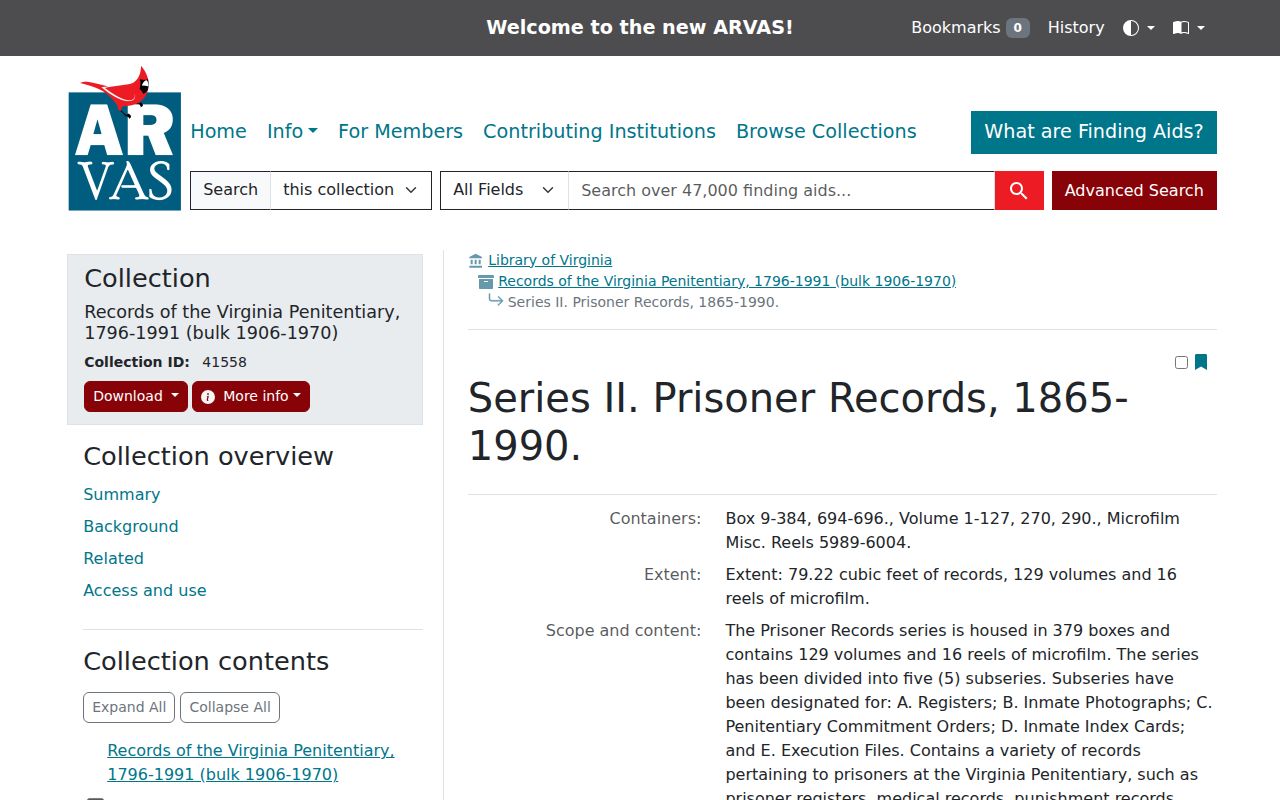
An online repost is not an archive. The entry lets a researcher request the source record by collection instead of settling for a copy.
Virginia Jail Photo Retention
Old photos vanish for scheduled reasons. Virginia's retention schedules explain why one custodian has nothing while a different record survives elsewhere. Local and regional jail inmate-incarceration records sit in series 100645 of current GS-08, effective September 11, 2025. The series can include booking sheets, intake and screening records, confinement history, property, incidents, classification records, pretrial-release material, parole notices, correspondence, and photographs. Retention runs three years after separation. Then comes confidential destruction.
State records follow a different clock. They fall under current GS-117. Series 200209 includes adult and juvenile booking fingerprints and photographs made available to CCRE. Retention is 100 years after birth. Confidential destruction follows. Juvenile categories have different rules, including a shorter period for a matter where no warrant or petition was filed. That long adult period does not make a picture searchable online or open to every requester.
The local clock starts after separation from custody, not on the day the photo was taken. That matters when asking a jail whether a record from a known year should still exist. The state clock is keyed to birth instead. Neither period applies blindly. Know which system created or received the image. Apply the matching schedule to that one file.
Retention is not access. A record can still exist yet be closed, exempt, sealed, transferred, or held by another office. A third-party copy can outlast the government record itself. Ask the likely custodian about the series and the access rule before paying for a search or scan. For its part, Virginia's intake-photo statute explains which adult routine initial-intake photograph is a public record on request, notes the felony-investigation exception, and does not require agencies to post old photos or override a separate closure rule.
Note: A retention schedule tells agencies when to keep or destroy records, not whether a particular photo can be released to the public.
Requesting Virginia Archive Records
Older Virginia records usually live at the state level. Start with the Library of Virginia's records-management and archives services page. From there, its Ask a Research Question path handles anything dated or hard to pin down. Naming the collection speeds the search. Local bookings are a different matter, so write to the agency or jail that likely made or kept the record and ask whether it moved. A narrow request also helps staff tell an image apart from a docket or a custody log.
- Write down the person's name, locality, likely agency, and the closest booking or incarceration date you can support.
- Describe the item, such as a booking photograph, negative, register entry, or confinement file. Include a case number or collection number if known.
- Check the relevant finding aid or records schedule, then contact the named custodian to confirm it holds the material and can review the request.
- Ask whether privacy limits, transfer status, or destruction rules affect access. Do not assume a public docket means the photograph is also open.
- Before ordering a scan or copy, request a cost estimate and ask about the expected review time.
Patience pays once a request goes out. The Library's research-room rules warn of long waits. Electronic state-record requests can take several weeks to process. Copies, scans, oversized items, and staff review may all carry fees, so ask for a quote first. Custody follows Virginia FOIA, § 2.2-3704(J): an agency that transfers records to the Library stays custodian until they are permanently archived, and after that Library rules govern access. The Virginia FOIA page also spells out response and cost language for public-record requests.
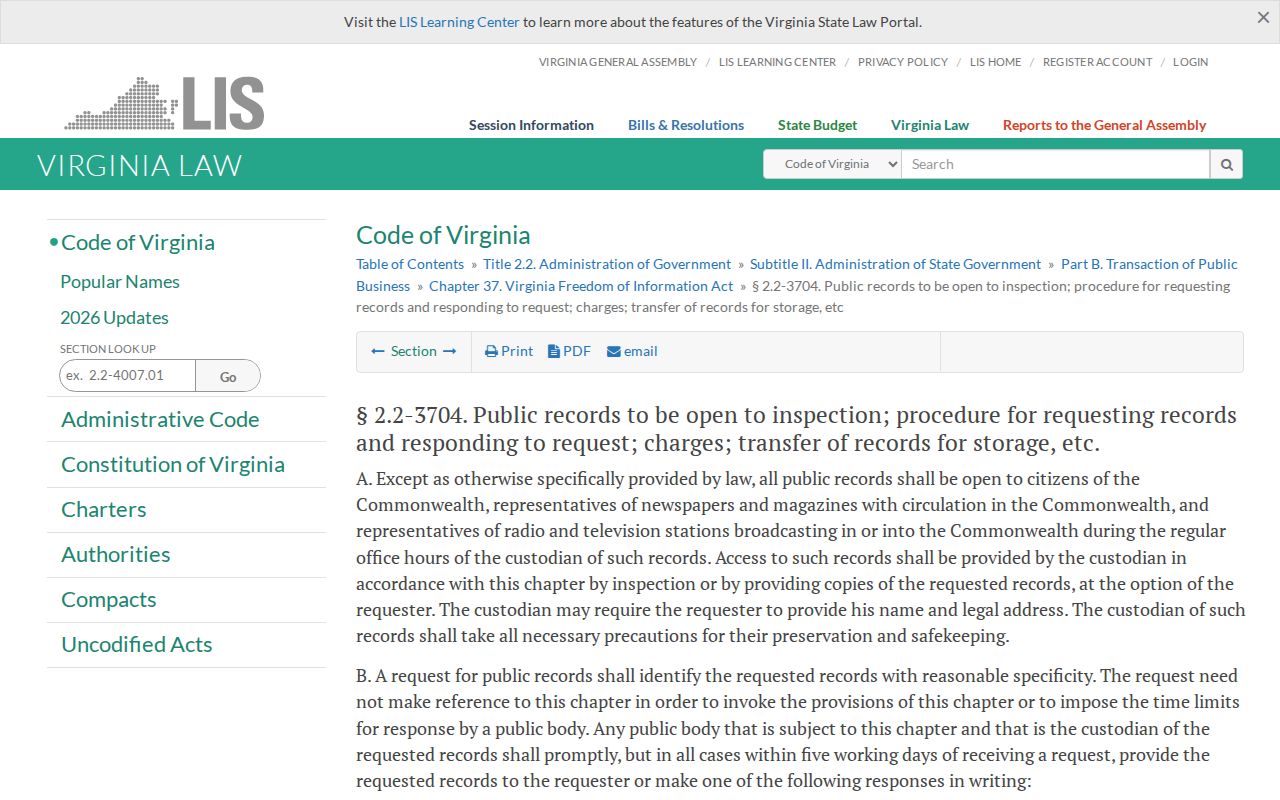
So pick your path by custody. The statute works for questions aimed at an agency, while a permanently archived item follows the Library's own access process instead.
Note: State archive requests and local jail requests can follow different custodians, response paths, privacy rules, and copy costs.
When Virginia Arrest Records Age
Digging for an old Virginia arrest usually takes two tracks. The local custodian may hold the jail or intake record. The court clerk keeps the case file and its outcome. A court portal helps you pin down the court, the case number, and the dates. Still, it cannot prove a booking photo sat with the docket. Coverage also varies by court and year.
Virginia splits its courts by type and locality. No single public circuit search spans every circuit. The Juvenile and Domestic Relations District Court offers no online case-information search at all. The Virginia Courts case-search explanation lays out these limits plainly. A name search can come up empty. The case may also predate portal coverage. A clerk can then point you to the right file path. For lower-court matters, start with the General District Court search. Pick a court first. Then enter a name or case number.
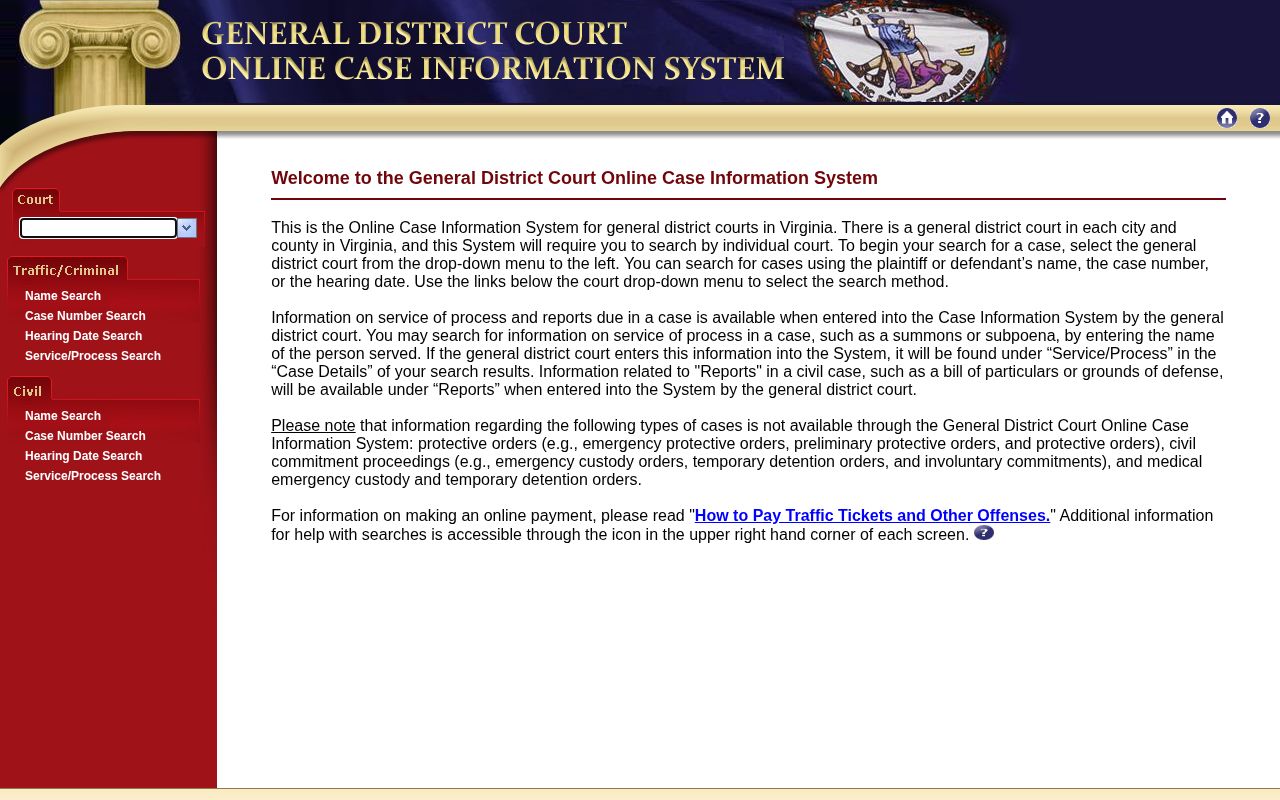
A court search only points you toward the file. The arresting agency or jail remains the best bet for an intake photo. The Virginia Courts case-information entry point gathers the available searches in one place and notes where they stop. Circuit access is fragmented rather than universal. Juvenile case details have no online JDR search. A clerk can sort out the correct record path when an old case fails to surface in any portal.
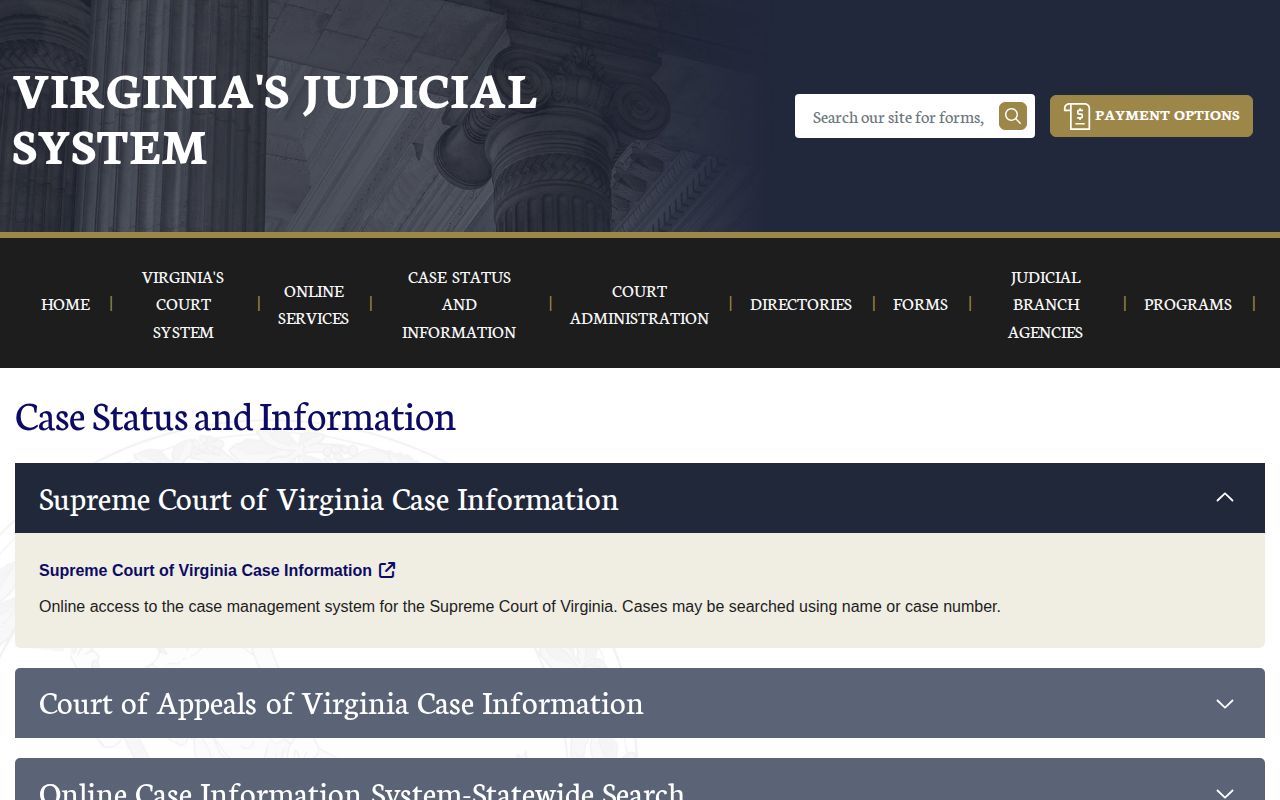
Confirm the outcome through the court record first. Then ask the right custodian directly whether an old booking image still exists at all.
What may survive: a docket can outlive a destroyed intake photo. A catalog description can exist with no digitized image behind it. Finding a record listed does not guarantee access or a copy.
For recent local bookings, start with the County Directory and pick your locality. The Virginia statewide search page then covers roster, feed, and request options. Old records need a named custodian and a date range, not a broad name sweep.